

Table of Contents
- How Long Does Coffee Stay Fresh? The Short Answer
- The Best Way to Store Coffee Beans for Maximum Freshness
- How Long Does Ground Coffee Last Compared to Whole Bean?
- Signs of Stale Coffee Beans You Can Spot Before Brewing
- Degassing, Roast Date, and the Freshness Peak
- Bean Density, Processing Method, and Troubleshooting Stale Coffee
- Coffee Storage and Sustainability: What Actually Helps
- Conclusion
- Frequently Asked Questions
Last Updated: September 23, 2026
How Long Does Coffee Stay Fresh? The Short Answer
Coffee stays fresh for about two to four weeks after the roast date if you store whole beans in an airtight, opaque container at room temperature. Ground coffee loses its edge far faster, often within days. This guide from The Elite 15 Coffee breaks down how to keep coffee stay fresh, why it fades, and how to protect the flavor you paid for.
The Best Way to Store Coffee Beans for Maximum Freshness
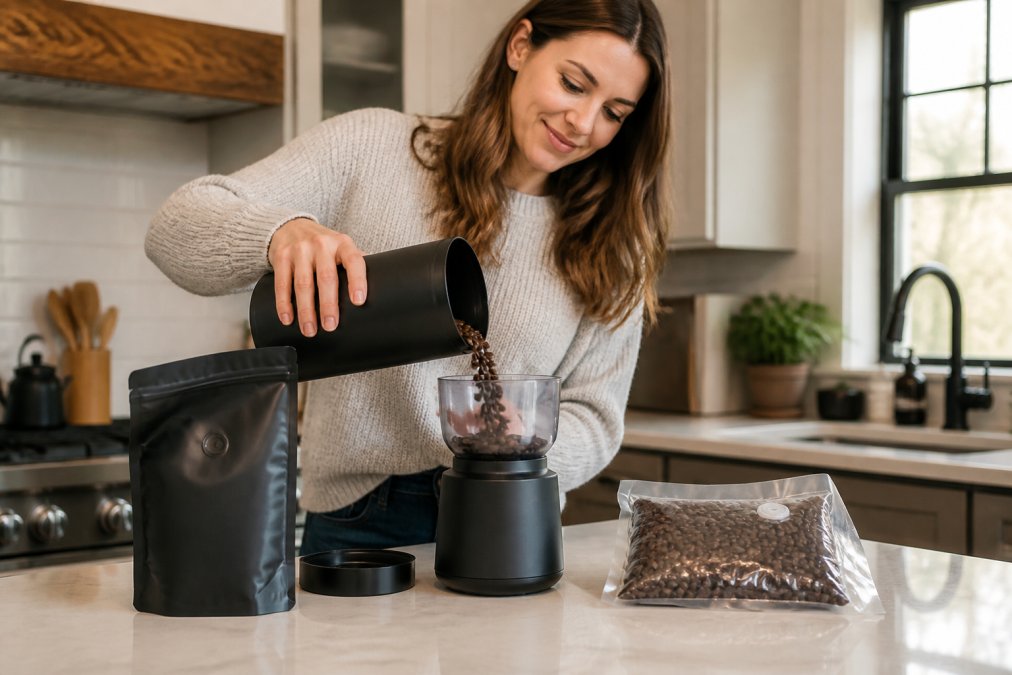
The best way to store coffee beans is in an airtight, opaque container kept at room temperature, away from light and heat. This single habit does more for flavor than any grinder upgrade.
Why Oxygen, Light, Heat, and Moisture Break Coffee Down
Oxygen drives oxidation, the chemical reaction that turns bright, fruity notes into cardboard. More specifically, oxygen attacks the lipids and oils on the bean surface, breaking them into smaller compounds that read as papery, rancid, or flat. Light accelerates that decay and can push oil migration to the surface, where it goes rancid. Heat speeds every reaction, and moisture invites both staleness and mold.
Freezer, Fridge, or Pantry: Where Coffee Actually Belongs
The pantry wins for daily use. The freezer is a legitimate tool for long-term storage, but only if you seal beans in an airtight, vacuum-sealed bag and let them come to room temperature before grinding. The refrigerator is the worst option: it cycles through moisture and pulls in odors from everything around it.
| Storage Method | Best For | Main Risk | Verdict |
|---|---|---|---|
| Pantry (opaque, airtight) | Daily brewing | Heat near the stove | Best for most people |
| Freezer (vacuum-sealed) | Long-term backup | Freezer burn, condensation | Good if sealed properly |
| Refrigerator | Nothing, really | Moisture and odor transfer | Avoid |
The Container Matters More Than You Think
Not all airtight containers are equal. A one-way valve bag is excellent for the first two weeks because it manages degassing while limiting oxygen. A vacuum-sealed canister is better for longer storage because it removes the air entirely. A simple clamp-lid jar is better than nothing, but it still lets a small amount of oxygen in every time you open it.
How to Store Opened vs. Unopened Bags
An unopened bag with a one-way valve keeps well for weeks past the roast date because the seal limits oxygen exposure. Once you open it, the countdown accelerates sharply. This is why roast date matters more than any "best by" label.
A Quick Note on Sustainability
Reusable airtight canisters and vacuum-sealed containers cut down on single-use packaging while doing a better job of keeping oxygen out. Buying whole bean in larger bags and storing it properly reduces both waste and stale coffee. The most sustainable storage habit is also the freshest one: buy only what you will drink in two to four weeks, and store it well.
How Long Does Ground Coffee Last Compared to Whole Bean?
Ground coffee lasts a fraction of the time whole beans do. Grinding exposes far more surface area to oxygen, so the clock runs several times faster.
Opened vs. Unopened Bags: Two Different Clocks
An unopened bag with a one-way valve keeps well for weeks past the roast date because the seal limits oxygen exposure. Once you open it, the countdown accelerates sharply. This is why roast date matters more than any "best by" label.
Signs of Stale Coffee Beans You Can Spot Before Brewing
The clearest signs of stale coffee beans are a dull, matte surface instead of a slight sheen, a weak aroma when you open the bag, and a flat taste with no sweetness. You can often catch staleness before you ever brew.
Run through this quick check:
- Smell the beans: fresh coffee has a strong, complex aroma; stale coffee smells like paper or cardboard
- Look at the surface: a light oil sheen is normal in the first weeks; a dry, faded look suggests age
- Feel for density: fresh beans feel heavier and more solid
- Taste a small sample: stale coffee tastes flat and slightly bitter with no brightness
- Check the bloom: fresh grounds swell and bubble when hot water hits them; stale grounds barely react
Degassing, Roast Date, and the Freshness Peak
Degassing is the release of carbon dioxide trapped in beans during roasting, and it is why coffee needs a short rest before it hits its peak. Brew too soon and the gas disrupts extraction, giving you an uneven, gassy cup.
Bean Density, Processing Method, and Troubleshooting Stale Coffee
Bean density and processing method quietly change how long coffee stays fresh, and most storage advice ignores both. This is the expert-level layer that separates a generic guide from one that actually explains what is happening in your bag.
Why Dense Beans Last Longer
Denser beans, often grown at higher altitudes, hold their structure and aromatics longer. Higher altitude means slower cherry development, which typically produces a harder, denser bean with tighter cell structure. That density slows the migration of oils and volatile compounds to the surface, so oxidation has less to work with. A dense, high-grown bean left open on the counter will still go stale faster than an average bean kept airtight and dark, but between two beans stored identically, the denser one usually holds its peak longer.
How Processing Method Changes the Clock
Washed coffees tend to present cleaner, more stable flavor profiles because the fruit is removed before drying, leaving less residual sugar and oil on the surface. Natural and honey-processed beans can fade differently because of residual sugars and oils on the surface. Those surface compounds are delicious when fresh, but they are also more exposed to oxygen. A natural process coffee may taste spectacular in week one and noticeably flatter by week three, while a washed coffee may change more gradually.
How to Rescue Coffee That Has Passed Its Peak
If your coffee already tastes stale, you have options. Cold brew masks flatness better than hot methods because the long, cool extraction smooths over harsh notes. A coarser grind and slightly cooler water can also reduce the bitterness that staleness amplifies. For baking, stale coffee can be ground fine and used in brownies, spice rubs, or marinades where the coffee is a background note rather than the star.
Coffee Storage and Sustainability: What Actually Helps
Sustainability and freshness often pull in the same direction. Reusable airtight canisters and vacuum-sealed containers cut down on single-use packaging while doing a better job of keeping oxygen out. Buying whole bean in larger bags and storing it properly reduces both waste and stale coffee.
Conclusion
The honest challenge with coffee freshness is that most of us buy it, store it badly, and then wonder why the last cup tastes like nothing. Fix the storage, watch the roast date, and you solve most of the problem.
Frequently Asked Questions
How long does ground coffee last once the bag is opened?
Ground coffee loses most of its aroma within days of opening. For peak flavor, use it within one to two weeks. Beyond that, oxidation and moisture exposure flatten the flavor profile, though the coffee stays safe to drink much longer. Storing ground coffee in an airtight, opaque container away from heat and direct sunlight slows the decline. If you brew daily, buying whole bean and grinding just before brewing gives you a noticeably livelier cup.
Can I drink coffee that expired two years ago?
Coffee does not spoil the way milk does, so two-year-old coffee is unlikely to make you sick. It will, however, taste flat, papery, or dull because the volatile aromatic compounds faded long ago. Check for moisture, mold, or a musty smell before brewing. If the beans look and smell fine, they are safe but past their freshness peak. For a rich, lively cup, start with freshly roasted coffee instead.
What are the clearest signs of stale coffee beans?
The most reliable signs of stale coffee beans are a dull, matte surface instead of an oily sheen, a weak or cardboard-like aroma when you open the bag, and beans that feel light and dry. Brewed coffee from stale beans tastes flat, sour, or papery and lacks the sweetness of fresh coffee. A missing roast date on the bag is another warning sign, since you cannot judge shelf life without knowing when the beans were roasted.
Is freezing coffee beans a good idea?
Freezing works well if you do it correctly. Store beans in a vacuum seal or airtight container with as little oxygen as possible, and freeze in small portions you will use within a week or two. Each time you open the container, moisture condenses on the beans, which speeds up staleness and can cause freezer burn. Take out only what you need, let it come to room temperature before grinding, and never refreeze the same beans repeatedly.
Does coffee actually go bad, or does it just lose flavor?
Coffee rarely becomes unsafe to drink, but it does go stale. Oxidation, moisture, heat, and light break down the volatile aromatic compounds that give coffee its aroma and flavor profile. The result is a flat, dull cup rather than a dangerous one. Mold can grow if beans are stored damp, so discard any coffee with visible mold or a musty smell. Otherwise, old coffee is a flavor problem, not a safety problem.
How do I know if my coffee beans are past their prime?
Check the roast date first. Whole bean coffee hits its freshness peak roughly 5 to 14 days after roasting and stays good for about four to six weeks if stored properly in an airtight, opaque container. If the bag has no roast date, or the beans smell weak and look dry, assume they are past their prime. A quick sensory evaluation, smelling the grounds before brewing, tells you a lot about what is left in the bean.